Roof Repair vs. Roof Replacement: How to Decide
Not sure if you need a roof repair or full replacement? Learn the signs, costs, and options so you can protect your home without blowing your budget.
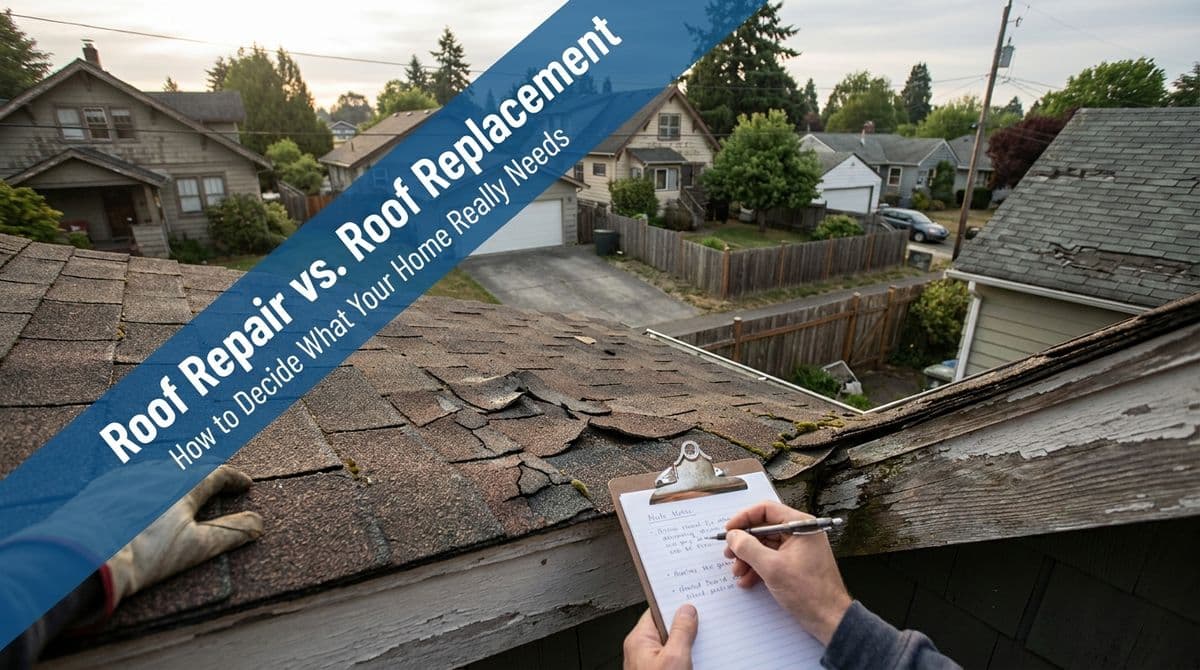
When You’re Not Sure If You Need a Roof Repair or a Whole New Roof
We recently got a call from a homeowner — let’s call her Diane — who was feeling stuck. She told us, “I need a roof. I don’t know if it’s a repair or a replacement… really, whichever one I can afford.” On top of that, she’d been calling another company for two and a half weeks and could never get anyone to actually help her.
Diane’s situation is more common than you might think. Folks know they’ve got a roof problem, they’re worried about money, and they don’t want to get pushed into a full replacement if a repair would do the job. So let’s walk through how we look at this question on every call and inspection.
Signs You May Only Need a Roof Repair
First, there are plenty of times when a repair is all your home really needs. We usually lean toward repair when the roof is otherwise healthy and the damage is limited. Typical repair situations include:
- Localized leaks: A small stain on one section of ceiling, often near a vent, chimney, or skylight. The leak is usually tied to failed flashing or a few bad shingles.
- A few missing or damaged shingles: Wind storms can lift or tear off shingles in one area. If the rest of the roof looks good, we can often replace that section.
- Recent storm damage on a younger roof: If your roof is under about 10–12 years old and took a hit from hail or debris, a targeted repair can extend its life.
- Minor flashing or sealant issues: Cracked caulking or loose metal around chimneys, walls, or pipe boots can be repaired without redoing the entire roof.
If the shingles still have good granule coverage, they’re lying flat, and the roof deck feels solid underfoot, we’ll always talk through repair options first.
Signs It’s Time to Consider Full Roof Replacement
On the other hand, there are situations where a repair is just a bandage and you’ll keep chasing leaks. We start talking about replacement when we see:
- Widespread shingle failure: Shingles curling, cracking, or bald across large areas of the roof.
- Repeated leaks in different rooms: If you’ve patched one leak after another over a few years, the system as a whole is likely failing.
- Age of the roof: Most asphalt shingle roofs last around 20–25 years in our climate. Once you’re at or past that, big repairs usually don’t make long-term financial sense.
- Sagging or soft spots: Any sagging lines in the roof or spongy areas underfoot can indicate problems with the roof deck or structure that go beyond surface shingles.
- Widespread granule loss and dark streaks: You’ll see exposed black asphalt and patchy color rather than a consistent surface.
When we see several of these signs together, we’ll be honest and explain why money spent on repairs might be better put toward a full replacement that actually solves the problem for decades.
What We Look For During a Roof Inspection
Whether the appointment starts with a phone call like Diane’s or an online request, the inspection is where decisions get clear. Here’s how we typically evaluate a roof:
- Exterior check: We walk the roof when it’s safe to do so, looking at shingles, flashing, vents, valleys, and any signs of sagging or poor ventilation.
- Attic and interior check: When possible, we look for moisture, daylight through the roof, mold, or insulation issues in the attic, and staining on ceilings inside.
- Age and history: We’ll ask when the roof was installed and whether you’ve had prior repairs or insurance claims.
During that visit, some smart questions to ask your roofer are:
- “What would a repair look like, and how long do you expect it to last?”
- “Can you show me exactly where the roof is failing?” (Good roofers will show photos.)
- “Do I have any urgent issues that can’t wait?”
- “Can you give me both a repair estimate and a replacement estimate?”
Costs, Lifespan, and Getting the Most for Your Budget
Every home is different, but there are some general cost and lifespan expectations:
- Roof repairs: Often range from a few hundred dollars for minor fixes up to a couple thousand for more involved work. A good repair on an otherwise healthy roof can buy you 5–10 more years of life.
- Roof replacement: A full asphalt shingle replacement can start in the low thousands and go up depending on size, steepness, tear-off needs, and material upgrades. In return, you’re usually getting 20–30 years of protection.
When money is tight, like it was for Diane, the key question is, “Will this repair keep me dry for long enough to be worth it?” If a repair is only likely to last a year or two on a 25-year-old roof, we’ll talk honestly about whether it’s better to invest in replacement and how to spread out that cost.
Satellite Measurements and Remote Estimates
With Diane, we started by asking if she could text her address so we could pull satellite measurements and email a quote. Here’s how that works in general:
- Satellite tools: We use aerial imagery to measure the square footage and pitch of your roof. This gives us a solid starting point for material quantities and base pricing.
- Remote estimates: For straightforward roofs with no obvious complexity, a satellite-based estimate can be accurate enough to help you budget and compare options.
When is an in-person inspection needed? Any time we’re dealing with visible leaks, sagging, unusual roof shapes, multiple layers of old roofing, or questions about the decking or structure, we’ll want eyes on the roof and, ideally, in the attic. Satellite can’t see rot, soft spots, or hidden storm damage — just the outline of the roof.
Options for Seniors and Budget-Conscious Homeowners
During our call, Diane mentioned her husband was 80 and asked about senior discounts she’d seen online. We hear that a lot, and we always work to find options that fit a fixed income. Depending on the situation, we may be able to help with:
- Senior or military discounts: Many roofers offer these; just ask up front so it’s included in your quote.
- Financing: Monthly payment plans can make a replacement possible when a lump sum isn’t.
- Insurance claims: If the damage is storm-related, we can document it and help you navigate a claim with your insurer.
- Phased work: In some cases, we can prioritize the most critical sections first and schedule non-urgent work later.
The most important thing is clear, honest communication. If your budget is tight, tell us — like Diane did — and we’ll walk you through repair vs. replacement, short-term vs. long-term value, and any programs or discounts you might qualify for.
If you’re staring at stains on the ceiling or shingles in the yard and wondering what your home really needs, the next step is simple: let us take a look, explain what we see in plain language, and give you options that respect both your home and your budget.